+86 18968869621


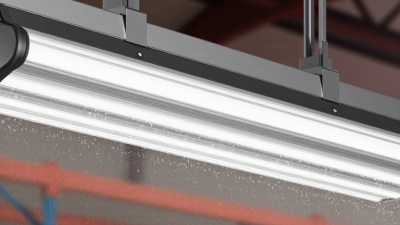
Choosing LED lighting for an outdoor space requires more than selecting the brightest fixture. A Led Waterproof Slat Light must withstand rain, dust, sunlight, and seasonal temperature changes. It should also provide comfortable illumination without creating harsh glare. Garden paths, parking areas, covered walkways, and building entrances all present different demands. Measure the space first.
In practical installations, water often collects near joints, mounting channels, and cable entries. Experienced installers therefore examine the complete fixture, not only its advertised rating. An IP65 rating may resist water jets, but it does not guarantee protection against flooding or poor installation. Check the housing material, rubber gaskets, end caps, cable glands, and drainage conditions. Coastal locations may require stronger corrosion resistance. Areas with possible impact may need an appropriate IK rating.
Light quality matters too. Confirm lumen output, beam angle, color temperature, and color rendering index. A 4000K light can suit a commercial walkway, while 3000K may feel more comfortable near homes. Review manufacturer test reports, operating temperatures, warranty terms, and replacement support. Vague specifications deserve caution. So does an unusually low price.
Mounting orientation affects performance. Avoid placing the fixture where leaves, snow, or standing water can block ventilation and drainage. Clean the lens periodically, especially near roads or coastal air. A fixture can be waterproof and still fail early when installed carelessly. This guide compares the practical features, certifications, installation details, and maintenance needs that help you choose with greater confidence. Even careful buyers may overlook one detail, so inspect the complete application before ordering.
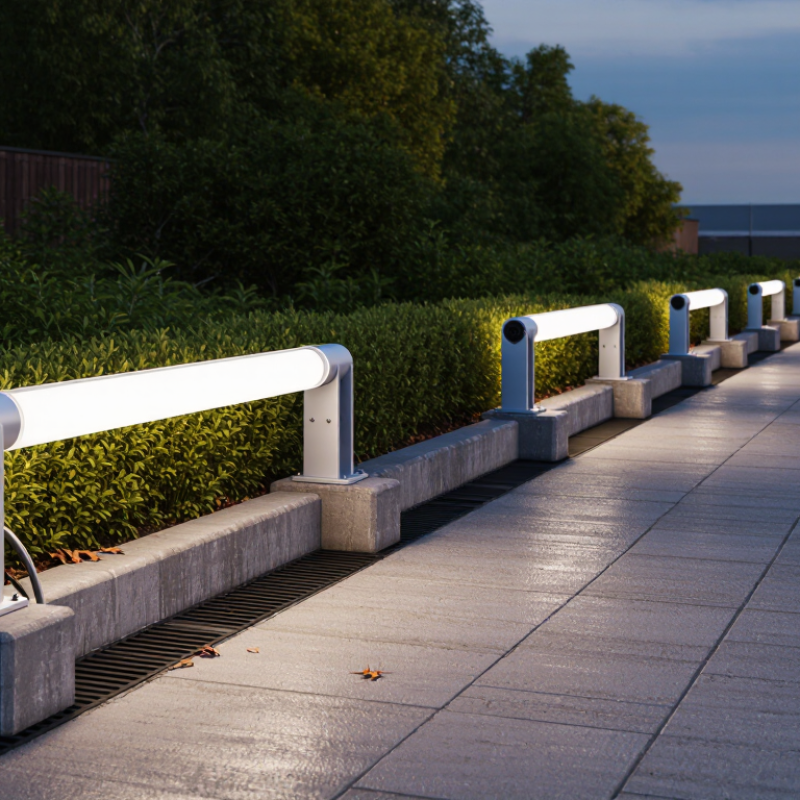
Choosing LED waterproof slat lights for outdoor use starts with understanding the IP rating. IP65 means the housing is dust-tight and protected against water jets from any direction. IP66 offers stronger protection against powerful water jets. Both ratings suit many patios, walkways, covered parking areas, and building exteriors.
Neither rating permits underwater operation.
IP ratings describe the enclosure, not the entire installation. They do not confirm resistance to sunlight, salt air, impact, or extreme temperature changes. Check for UV-stable materials, corrosion-resistant fasteners, sealed cable glands, and protected connectors. In coastal areas, salt can attack metal parts even when the lamp carries an IP66 rating. Good drainage also matters. Water trapped behind a fixture may cause problems over time.
For exposed walls, IP66 can provide extra security during driving rain or pressure washing. IP65 may be adequate under a roof with limited splash exposure. Match the rating to the actual location, not simply the highest number. A bright fitting can still fail if its cable entry faces upward or its seal is pinched.
Installation details deserve careful attention. Keep joints above standing water, tighten seals evenly, and inspect gaskets before mounting. A qualified electrician should verify the circuit, grounding, and outdoor protection. I have seen weather-rated lights suffer because installers ignored the connection points. The rating is helpful, but workmanship remains part of waterproof performance. Recheck the fixture after one wet season. Surface cracks or fading may reveal protection problems early.
LED Waterproof Slat Light Basics: IP65–IP66 Ratings and Outdoor Protection
Both IP65 and IP66 products are dust-tight, represented by the first digit 6. IP65 protects against water jets from any direction, while IP66 provides protection against more powerful water jets. For exposed outdoor areas with frequent heavy cleaning or severe weather, IP66 offers the higher water-resistance level.
For outdoor pathways, set brightness at 100–150 lumens per square meter. This range supports safe walking without creating harsh glare. A 12-square-meter path may need roughly 1,200–1,800 usable lumens. Measure the walking surface, not the surrounding lawn. Dark paving and dense plants can absorb more light. Pale stone may need less.
Check the light’s beam angle and spacing before trusting its lumen rating. A narrow beam can leave gaps between fixtures. A wider beam usually spreads light more evenly along steps and bends. I have seen bright fittings create dark patches when installed too far apart. The layout looked efficient, but it felt uncomfortable at night. That mistake is easy to repeat.
For wet locations, choose a properly sealed slat light with an outdoor-rated ingress protection level, such as IP65 or higher. Inspect the housing, cable entry, and mounting clips. These small parts often fail before the LEDs. Install fixtures low enough to illuminate the path, but shield direct views of the light source. Test them after sunset from a walking position. The result may seem dim beside a driveway, yet brighter near the eyes. Adjust spacing before increasing power. Low-voltage systems also need suitable outdoor connections and protected cable runs.
When choosing LED waterproof slat lights, check useful light output rather than wattage alone. A fixture rated above 100 lm/W can deliver strong brightness with lower energy use. However, confirm whether this figure describes the LED chip or the complete fixture. Real performance may drop after lenses, drivers, and housing are included.
During outdoor lighting inspections, I look for test data, not attractive claims. Ask for measured efficacy, color consistency, power factor, and lumen maintenance results. LEDs rated for 50,000 hours can support long service intervals, but heat remains a serious concern. A sealed housing protects against rain, yet poor heat dissipation can shorten LED life. Look for a robust aluminum body and a clearly stated IP rating suitable for the installation area.
Installation details matter more than many buyers expect. Mount the light away from constant water spray, leave space around the housing, and use suitable cable glands. I once saw a new fixture fail early because condensation entered through an incorrectly tightened connector. That mistake was avoidable. Also, 50,000 hours is usually a projected lifespan, not a promise of perfect brightness. Review the L70 rating, warranty terms, and driver quality before ordering. Small differences in efficiency and thermal design can become noticeable on a long pathway or exposed loading area.
When choosing LED waterproof slat lights for outdoor areas, color quality deserves careful attention. A color temperature between 3,000 K and 4,000 K usually creates a balanced outdoor appearance. Around 3,000 K feels warm and welcoming near patios, restaurants, and wooden walls. Near 4,000 K looks cleaner and sharper around walkways, garages, and commercial entrances.
CRI matters just as much. Choose a rating of 80 or higher so skin, plants, painted surfaces, and food appear more natural. In practical installations, poor color rendering can make green leaves look gray or red brick look dull. I have seen this happen even when the brightness seemed excellent. Brightness alone is not quality. Check the product data, and ask for a color sample when possible.
Tips: Compare the light at night, not only in a showroom. Test it beside your building materials. Remember that wet pavement can reflect a cooler tone. A 3,500 K fixture may look perfect on paper but slightly harsh beside pale stone. I still misjudge this when nearby security lighting changes the scene. Also check whether the listed CRI applies to the full color range, not only one test condition. Choose consistent CCT across connected fixtures, because small differences become obvious along a long wall.
Match Color Quality: 3,000–4,000 K CCT and CRI 80 or Higher
| Selection Dimension | Recommended Specification | Why It Matters Outdoors | Suitable Application | What to Check Before Purchase |
|---|---|---|---|---|
| Correlated Color Temperature (CCT) | 3,000–4,000 K | Warm to neutral white light provides comfortable visibility while preserving the appearance of building materials, plants, paving, and outdoor furnishings. | Residential entrances, patios, covered walkways, restaurants, hospitality areas, and general outdoor circulation. | Confirm that the stated CCT is the nominal value and review the manufacturer's tolerance or color-consistency information. |
| Color Rendering Index (CRI) | CRI 80 or higher | A CRI of 80 or above generally renders common exterior colors more naturally than basic low-CRI light sources. | Building façades, retail entrances, outdoor dining, walkways, and residential landscaping. | For accurate color-critical areas, such as artwork or high-end retail, request the full color-quality report and R9 performance rather than relying only on the general CRI value. |
| Ingress Protection | IP65 minimum; IP66 for more exposed locations | IP65 indicates protection against dust ingress and water jets. IP66 provides the same dust protection with a higher level of resistance to powerful water jets. | IP65: sheltered exterior areas and covered corridors. IP66: exposed façades, open walkways, and locations subject to wind-driven rain. | Check whether the complete assembled fixture, including end caps, connectors, and cable entries, has the stated IP rating. |
| Impact Protection | IK08 or higher where accidental impact is possible | A higher IK rating improves resistance to mechanical impact from tools, equipment, or incidental contact. IK ratings are defined under IEC 62262 testing conditions. | Parking areas, service corridors, sports facilities, public passages, and low-mounted installations. | Match the IK rating to the installation height, traffic level, and risk of vandalism; IP and IK ratings measure different properties. |
| Luminous Efficacy | Approximately 100–150 lm/W for efficient general lighting | Higher efficacy can reduce energy consumption for the same target light level, although optical design, temperature, and driver losses also affect real performance. | Long operating hours, commercial walkways, parking structures, and large outdoor covered spaces. | Compare system efficacy, not only LED-chip efficacy. Verify whether the stated lumens include the luminaire, diffuser, and driver. |
| Beam Distribution | 120°–150° for broad, even area coverage | A wide beam can reduce dark spots between fixtures. Narrower optics may be preferable when a corridor or façade requires more controlled distribution. | Wide beam: corridors, canopies, and covered parking. Controlled beam: façades, narrow paths, and accent-oriented layouts. | Review the photometric file or beam diagram and consider mounting height, fixture spacing, glare, and nearby reflective surfaces. |
| Operating Temperature | At least −20°C to +40°C; wider ranges for harsh climates | Outdoor luminaires may experience cold starts, summer heat, and temperature buildup under canopies. The stated range should cover the actual ambient conditions. | Temperate climates, exterior canopies, loading zones, and service areas. | Distinguish ambient-temperature limits from maximum case temperature, and allow ventilation around the fixture where required. |
| Rated Life | L70 of 50,000 hours or more | L70 describes the time until average light output reaches 70% of the initial value under stated test conditions; it is not a guarantee that every unit will operate for exactly that duration. | Installations where maintenance access is difficult or operating hours are high. | Check the L70 test conditions, ambient temperature, driver rating, and warranty terms. A longer rated life does not replace proper thermal management. |
| Flicker and Dimming | Low-flicker driver with compatible 0–10 V, DALI, or other required control | A suitable driver can improve visual comfort and enable energy-saving controls, occupancy sensors, or scheduled dimming. | Offices with outdoor circulation, hospitality venues, smart-building projects, and areas monitored by cameras. | Request flicker data, confirm control-system compatibility, and verify the minimum dimming level before installation. |
| Construction and Maintenance | UV-resistant housing, sealed end caps, replaceable or serviceable components | UV exposure, moisture, and thermal cycling can degrade plastics, seals, and electrical connections over time. | Exposed façades, coastal or sunny locations, maintenance-sensitive commercial properties, and large projects. | Inspect housing materials, gasket quality, cable glands, mounting hardware, surge protection, and access to the driver or terminal area. |
| Electrical Protection | Power factor ≥0.90 and surge protection suited to the site | A high power factor can reduce unnecessary reactive current, while surge protection helps address transient events on outdoor circuits. | Long cable runs, commercial installations, exposed outdoor circuits, and regions with frequent storms. | Verify input voltage, frequency, power factor, total harmonic distortion, surge rating, grounding method, and local electrical-code requirements. |
Choosing LED waterproof slat lights for outdoor use starts with impact resistance, not appearance. An IK08 rating means the housing withstands a 5-joule impact under IEC 62262 testing. That matters near loading areas, walkways, and sports facilities where tools or loose objects may strike the fixture. Check the test documentation, not only the product label. A credible supplier should provide clear ratings for impact, water protection, operating temperature, and electrical safety.
Material quality also affects long-term reliability. Powder-coated aluminum can resist corrosion while helping release heat from the LEDs. A UV-stable diffuser should remain clear after repeated sun exposure. Inspect the gasket closely; a thin or uneven seal can fail before the lamp does. I have seen installers focus on the shell and overlook cable entries. Rain finds weak points. Use outdoor-rated glands, sealed connectors, and stainless mounting hardware suited to the local environment.
Safe installation requires isolation of the power supply before wiring. Mount the light on a firm, level surface, and avoid trapping the gasket during tightening. Leave drainage paths clear, even on waterproof fittings. The cable should form a small drip loop, so water does not run toward the connection. An RCD or equivalent protective device should be installed where required by local electrical rules. Some mistakes only appear after a storm, which is why a careful inspection is worth the extra minutes.