
 +86 18968869621


News
0102030405
Analysis of T8 Bracket Lamp Import-Export Trends in H1 2025
2025-08-19
The global T8 bracket lamp market in H1 2025 saw dynamic shifts driven by trade policies, technological upgrades, and regional demand changes.
Key trends included tariff-induced market realignment. The U.S. raised tariffs on Chinese lighting products by 10% in February 2025, pushing the average rate for T8 bracket lamps to 35.6%. This caused a 5% YoY drop in China’s direct exports to North America in Q1. To counteract this, Chinese manufacturers expanded production in ASEAN—Vietnam’s T8 exports surged 40% in H1, leveraging lower tariffs and proximity to EU markets.
Technological compliance shaped product flows. The EU’s ErP 2025 energy efficiency standards (mandating ≥85 lm/W for non-directional LEDs) boosted demand for high-efficiency T8 models. Smart variants with IoT dimming and UV-C disinfection, certified to ErP and TUV, dominated Europe’s premium segments. Meanwhile, cost-effective Chinese models ($1.99–$2.89 for 1.2m tubes) targeted price-sensitive markets like Southeast Asia and Africa.
Emerging economies drove growth. African imports of Chinese T8 lamps rose 17% YoY, led by Nigeria and South Africa’s infrastructure projects. The Middle East saw LED penetration hit 26%, with Saudi Arabia and the UAE prioritizing energy-efficient retrofits.
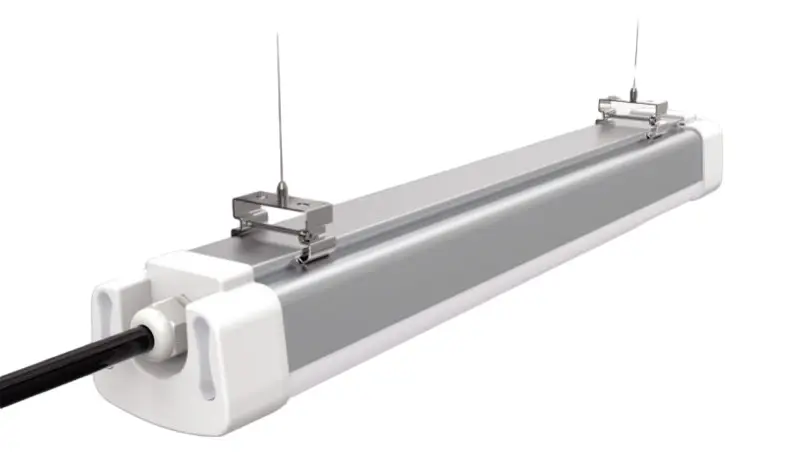
Supply chains faced pressures: aluminum substrate costs climbed 13.4% in H1. However, Chinese manufacturers offset this via automation (18% lower production costs in smart factories) and vertical integration. Guangdong-based suppliers, for instance, offered IP65-rated tri-proof T8 lamps at $5.2–$6.4/1.2m, catering to industrial needs in Europe and the Middle East.
Challenges included global economic slowdowns and oversupply in mature markets. Yet, long-term prospects remained positive, fueled by urbanization in India/Southeast Asia (Vietnam’s T8 demand rose 22% in H1) and China’s dual carbon policy, which mandates energy-efficient retrofits.
In summary, H1 2025 was marked by tariff-driven diversification, tech differentiation, and emerging market expansion. China retained 38% of global exports, while ASEAN hubs like Vietnam emerged as key players. Compliance with regional standards and smart/UV-C innovation will drive future growth.