 +86 18968869621
Leave Your Message
-
CONTACT NUMBER
-
 CONTACT NUMBER
 -

Choosing Emergency Lights for global sourcing is not simply a price comparison. It is a decision about visibility, resilience, maintenance, and trust. A warehouse manager may notice the difference during a power failure: one fitting illuminates a clear aisle, while another leaves a doorway dim and uncertain. That practical moment matters more than a polished catalogue image.
Emergency-lighting specialist John Bullock offers a useful reminder: “Reliable emergency lighting must be tested, maintained, and understood before an emergency occurs.” His observation reflects a core sourcing principle. Buyers should examine battery performance, illumination duration, charging systems, housing materials, and test functions. They should also request traceable quality records, installation guidance, and consistent production samples. A low unit price can become expensive when batteries fail early, spare parts disappear, or specifications vary between shipments.
Global sourcing can improve access to advanced LED technology and scalable manufacturing. LEDs usually consume less energy, operate for long periods, and provide compact designs for corridors, stairwells, offices, and industrial facilities. However, “LED” is not a complete quality guarantee. Supplier audits, sample testing, packaging checks, and clear technical documents remain necessary. Standards and certification requirements also differ by market, so responsible buyers must verify local expectations before purchase.
Some choices remain imperfect. Even a reputable supplier can face delays or component shortages. A thoughtful sourcing plan should allow contingency stock and realistic testing time. The safest decision is rarely the cheapest offer. It is the product that performs visibly, repeatedly, and predictably when ordinary lighting disappears.
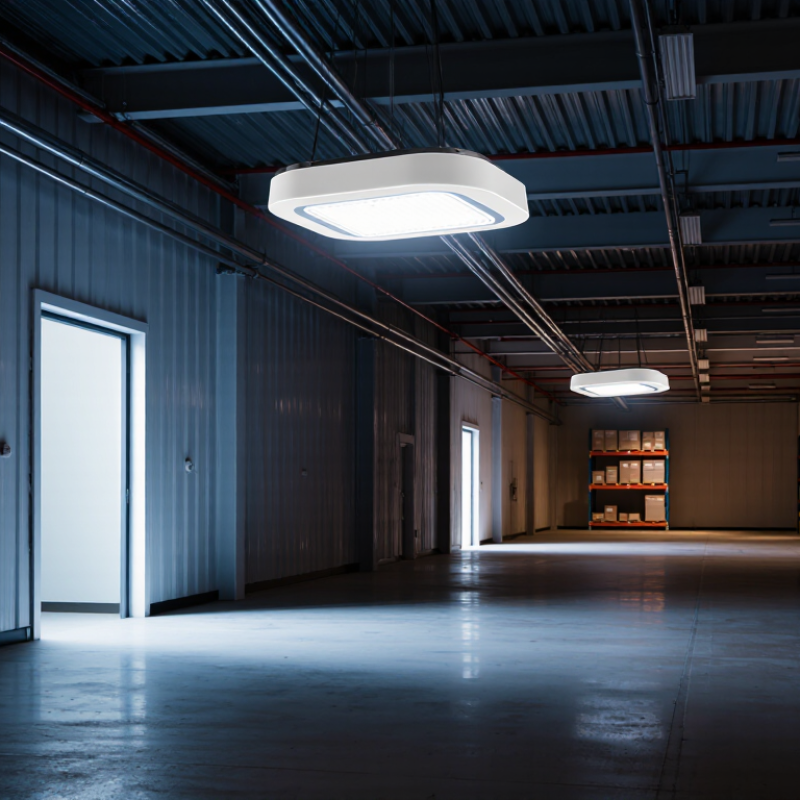
LED emergency lights are compact luminaires designed to provide temporary illumination during power failures. They normally receive AC power and charge an internal battery. When the mains supply stops, a control circuit switches instantly to battery-powered LEDs. This keeps escape routes, stairwells, and exit signs visible.
LEDs produce light through semiconductor chips, not heated filaments. The U.S. Department of Energy reports that LEDs use at least 75% less energy and last up to 25 times longer than incandescent lamps. The International Energy Agency also identifies efficient lighting as a practical route to reducing electricity demand. Still, battery quality, thermal control, and testing often matter more than headline brightness. A cheaper unit may look efficient, yet perform poorly after repeated charging cycles. That deserves honest review.
Tips: Check IEC 60598-2-22 compatibility, local voltage, emergency duration, and photometric test results before global sourcing. Ask for battery-cycle data and self-test records. Confirm whether the fitting is maintained or non-maintained. Review operating temperature too. A warehouse sample can pass inspection, but field conditions may expose weaknesses. Suppliers should provide clear test reports, installation instructions, and traceable quality records. The best purchasing decision is not always the lowest quotation.
| Data Dimension | LED Emergency Light Information | How It Works and Why It Matters for Global Sourcing |
|---|---|---|
| Product Definition | LED emergency lights are electrically powered luminaires that use light-emitting diodes and provide illumination when the normal power supply fails. | An emergency lighting system normally includes an LED light source, control gear, battery, charger, changeover circuit, indicator and test function. |
| Normal Operating Mode | The luminaire operates from the mains power supply while the internal battery is charged and maintained in standby condition. | The control circuit monitors the incoming power and keeps the battery ready for an automatic emergency changeover. |
| Power-Failure Operation | When the mains supply is interrupted, the LED module is powered by the rechargeable battery. | An electronic changeover circuit detects the supply failure and switches to battery operation, normally without requiring manual activation. |
| Emergency Duration | Common rated durations are 1 hour, 2 hours or 3 hours, depending on the product design and local requirements. | Duration is determined by battery capacity, LED power consumption, temperature, battery condition and the required emergency-lighting standard. |
| LED Light Source | LEDs are semiconductor devices that convert electrical energy into light through electroluminescence. | LEDs provide directional light, compact dimensions and efficient optical control, which can help reduce the size and energy demand of the luminaire. |
| Typical LED Efficacy | Modern LED modules commonly achieve approximately 80–150 lumens per watt, depending on the LED package, driver, optics and operating temperature. | Actual system efficacy should be verified from measured luminaire data because driver losses, thermal conditions and optical components affect delivered light output. |
| Service Life | Quality LED modules are often specified for approximately 25,000–100,000 operating hours, while the battery and driver may require replacement earlier. | Service life should be assessed by reviewing LED lifetime data, driver reliability, battery replacement intervals and the declared maintenance plan. |
| Energy Consumption | LED emergency luminaires generally use less operating power than comparable fluorescent or incandescent emergency products for a similar light output. | Lower power demand can reduce battery size requirements, operating costs and the energy needed during both normal and emergency operation. |
| Battery Options | Rechargeable batteries may use nickel-metal hydride, nickel-cadmium or lithium-based technologies, depending on the design and applicable regulations. | Battery selection affects temperature performance, cycle life, product size, transport classification, maintenance requirements and total cost of ownership. |
| Charging Function | The charger replenishes the battery while mains power is available and limits charging current according to the battery design. | Global buyers should verify charging time, overcharge protection, charging temperature range and compatibility with the target electrical supply. |
| Operating Voltage | Products may be designed for a specific AC input or for a wider input range, such as 100–240 V AC, depending on the model. | Input voltage, frequency and plug or terminal configuration must match the destination market. The stated range should be confirmed through technical documentation. |
| Emergency Lighting Modes | Maintained units remain illuminated during normal operation and continue operating from the battery during a power failure. Non-maintained units illuminate only during a power failure. | The required mode depends on building use, local regulations, escape-route planning and the specification of the installation. |
| Light Distribution | LED emergency lights may use wide-area, corridor, spot or asymmetric optical distributions. | Optical selection should be based on mounting height, spacing, escape-route geometry and the required illuminance rather than lumen output alone. |
| Light Output Verification | Performance is normally expressed using lumens, emergency duration and photometric data. | For reliable comparison, request maintained and emergency lumen output, photometric files, beam angles, test conditions and measured spacing data. |
| Color Temperature | Common LED color temperatures include approximately 3,000 K, 4,000 K and 6,500 K. | Color temperature affects visual appearance and should be selected according to the application, interior environment and local project specification. |
| Ingress Protection | Indoor products may have basic protection, while outdoor, industrial or wet-area products may require higher IP ratings. | The required IP rating depends on exposure to dust and water. The rating should be confirmed for the complete luminaire, not only the LED module. |
| Operating Temperature | Allowable temperature ranges vary by LED driver, battery chemistry and enclosure design. | Temperature limits are especially important for warehouses, cold rooms, outdoor installations and high-temperature industrial areas because battery performance can change significantly with temperature. |
| Testing and Maintenance | Emergency luminaires may include a manual test button, an indicator LED or an automatic self-test function. | Regular testing confirms battery charging, changeover operation, duration and fault indication. A maintenance schedule should be defined before large-scale purchasing. |
| Safety and Compliance | Emergency lighting products should be evaluated against the electrical, photometric, electromagnetic compatibility and emergency-lighting requirements applicable in the destination market. | Buyers should request current test reports, declarations, technical drawings, battery safety documents and traceable production information. Requirements vary by country and project type. |
| Global Sourcing Advantage | LED emergency lights combine efficient light output, compact construction, automatic backup operation and flexible installation options. | For international procurement, the key selection criteria are verified emergency performance, destination-market compatibility, battery transport requirements, documented quality control and long-term spare-parts availability. |